Welcome

...to the website of the James McGregor Stewart Society. We want to change the outlook for people confronting barriers. Please share this site with friends. Your contributions, comments and criticisms will add enthusiasm and vitality.
Please participate by subscribing!
Click here (opens a new window)
Statement of Purpose......... Take Action!......... Become a Member......... Contact

August 5, 2026

Arithmetic Discrimination

I once had a Math Professor who said "If you can't measure it, it doesn't exist."  I take that advice with a dose of skepticism, but numbers can be revealing.  In the case of the Systemic Discrimination agreement. there is the constant buzz of prose and a whole lot of numbers, but they are opaque and without clarity.

In a post in May, 2023, I tried to count the issues to be addressed in the provisional settlement agreement between the province and the Disability Rights Coalition on the subject of Systemic Discrimination.  My inexpert eye came up with this summary: 

and a more detailed timeline:


I thought I'd take another look in 2026.  Turning  to the province's "Annual Progress Report - Targets and Compliance Year 3: 1 April 2025 to 31 March 2026" you will find a 40 page multi-column table like this:

which is doubtless accurate but so detailed as to defy summary.  The Province uses vague terms like Slight Progress, Sufficient Progress, Subtantial Progess, and Exact Compliance to categorize its results.  DRC has its own version, 8 pages with yellow highlights, but still difficult to hold in your brain.  It looks like this:

The last two pages of the DRC summary carry a good suggestion:  Let's have an accurate index that's a bit easier to grasp.   DRC identifies the goal, the progress and the legal requirement for eight tasks.  I had to guess at a 2023 Base for a couple of numbers.  But the numbers seem accurate enough so that a "percent finished" can be calculated for each and a weighted summary produced:

CATEGORY2023 BASELINECREATED/REDUCEDGOAL 3/31COMPLETEDSHORTFALLPER-CENT FINISHED
LARGE INSTUTIONS870311653311-55947.6%
IPSC0428042-3847.5%
NO SUPPORT5892310231-35839.2%
LOCAL COORDINATORS0558055-2531.3%
FLEX, ILS+0159600159-44126.5%
<65 MOVED OUT1002000-2005.0%
HOMESHARE002000-2000.0%
TSA83-87400-40SEE NOTE

Weighted Percent Finished 38.9%

Put that in a graph and you get  an understandable picture of where in the agreement we stand.  Only a little over a third to where we should be!


REMEDY INDEX=WEIGHTED AVERAGE OF COMPLETED/2023 BASE 

Now we have a sensible presentation that will be a foundation for good questions and better answers.

  • Does this reflect a plan?
  • What is the main reason for each shortfall?
  • What is the catchup plan?
  • Should taxpayer dollars fund a go-slow project? 

Now my general objection is backed by Dr. Prince's year 3 monitoring report - a 4 alarm fire to be sure.  He says:

"At this stage of the Remedy’s timeframe, too many items are incomplete, too many are not meeting the targets for compliance. While the Province reported that most Year 3 requirements were in compliance, I conclude that more than half made only slight progress." 

Gus Reed
wcreedh@gmail.com


July 31, 2026

2026 Awards

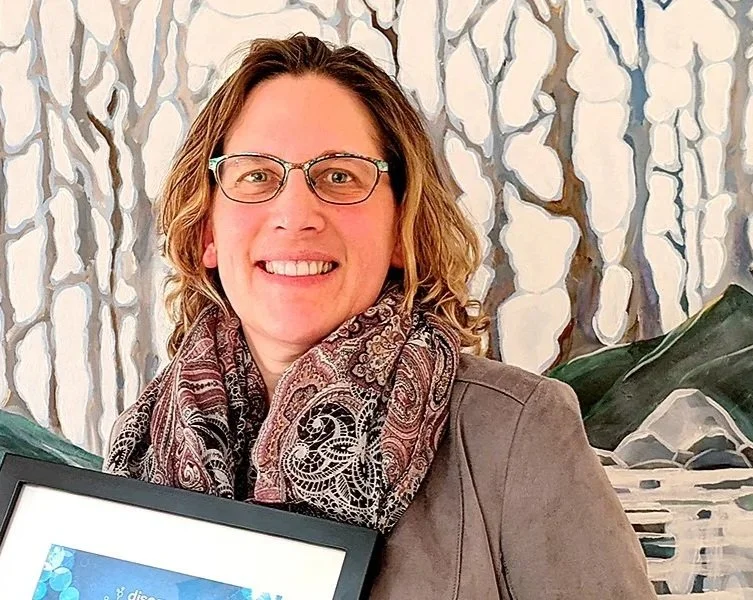
July saw the presentation of the James McGregor Stewart Award to two outstanding Nova Scotians.  Linda Campbell and Kayla MacKinnon are exceptionally accomplished in their fields and an inspiration to all. 

Former Speaker of the Legislature Kevin Murphy spoke at the ceremony.

Dr. Campbell is a Professor and a Senior Research Fellow at Saint Mary's University in Halifax and leads the Dynamic Environment & Ecosystem Health Research (DEEHR) group. Her research, teaching and service at Saint Mary’s University focus on sustainability + resilience of ecosystems, with emphasis on invasive species and environmental contaminants as stressors.


Dr. Campbell also leads projects on accessibility & inclusion in science fields, with emphasis on American Sign Language, including collaborations with professional interpreters on bilingualism and interpreting in science fields.


Kayla MacKinnon’s career in wheelchair basketball started when she met coach Cher Smith. Born with cerebral palsy, MacKinnon was looking to be more active when it was recommended she try archery.
The Dartmouth, N.S. native also tried wheelchair rugby and wheelchair tennis but decided to stick to wheelchair basketball.
Wheelchair basketball allows MacKinnon to share sport with her twin sister Julia.
Off the court, MacKinnon is a Dalhousie University student majoring in Health Promotion with a minor in Disability Management with the goal of working in an accessibility role when she graduates.
MacKinnon made her Team Canada debut with the Women’s Under-25 team at the 2023 U25 Women’s World Championship in Bangkok, Thailand.

April 2, 2026

March 19, 2026

Annual $1000 Award for a Nova Scotian with Disabilities

A $1000 award recognizing the outstanding contribution of a person living with a disability

The James McGregor Stewart Award was established in 2015 by friends of the James McGregor Stewart Society through CFNS. First in his class at Dalhousie Law School in 1914, McGregor Stewart was also president of the Student Council. He went on to head a Halifax law firm that became the present-day Stewart McKelvey, and served as Chairman of Dalhousie’s Board of Governors. In 2000, Canadian Lawyer magazine named him as one of Canada’s 10 greatest lawyers. He is also one of fewer than 500 Canadians to be awarded the Commander of the British Empire for services to the Empire in WW II.

J McG Stewart

About the award

The James McGregor Stewart Award celebrates the leadership and accomplishments of Nova Scotians with disabilities.  The award is unconditional, but it is intended to draw attention to the contributions of individuals who have provided leadership in their field. Past recipients have overcome physical and social barriers, bringing excellence and passion to their lives. Honorees have included successful advocates, outstanding athletes and effective mentors:

2015 – Sarah Dube, activist
2016 – Clary Stubbert, athlete
2017 – Gerry Post, accessibility directorate
2018 – Paul Vienneau, the man with a shovel
2019 – Jenn Powley, author
2020 – Kendall Worth, journalist
2021 – Hope McInnis, athlete
2022 – Vicky Levack, advocate
2023 – Paul Tingley, paralympian&nbsp
2024 -- Anne Camozzi, advocate and Martin Fudge, paralympian
2025 -- Mirriah Bernard-Tran, PhD and Jemma Bowers, advocate
2026 -- Open for application

Criteria

Nominations are accepted for Nova Scotia residents living with disabilities.

Nominees will be evaluated for determination and achievement in conquering personal or externally imposed boundaries, with emphasis on leadership, personal excellence and advocacy.

The Community Foundation of Nove Scotia administers the award - the application is found at https://cfns.ca/jamesmcgregorstewartaward/

Nominations due May 15. 


November 9, 2024

Dr. Maida Barton Follini, with admiration


Dr. Maida Barton Follini, retired psychologist, educator, writer, and life-long Quaker died on Sunday, November 3 in Halifax, at the age of 94.

Maida would often comment on posts to this blog, typically with sensitivity and candor:

"The slow, slow response to problems should be abandoned - citizens should not die before receiving compensation and help. 
The local gov. seems to act speedily when it is destroying helpful efforts (as in breaking down shelters charities made for the homeless).  I see the new gov. is moving on making an out-of-business motel into a shelter hopefully with supervision and good management. Homelessness is more dramatic than chronic disability but both conditions need sensitive and effective problem-solving. 
Hope you are well and thriving;   I am, although my serious arthritis makes me use either two canes, a walker, or my wheelchair, depending on the situation. But arthritis does not interfere with computer use, and I am engaged in much writing of letters, articles, etc. Am waiting to be eligible for my booster Covid shot."

I would wager that Maida met her fellow Radcliffe graduate Helen Keller (graduated much earlier in 1904 and a frequent Cambridge visitor) who had her own ties to Nova Scotia. 

Here is Maida's fascinating obituary.  A life well-lived indeed.  

Born in Greenwich, Connecticut in 1930, Maida had a life that was both long and full of an eclectic range of experiences. As a child, she spent a great deal of time exploring nature in her family’s several acres of fields and forests.

She followed her father and brothers to Harvard, attending what was then the women’s college of the university, Radcliffe, from 1948 to 1952. She majored in English and sang in the Radcliffe Choral Society. One of her fondest memories from that time was singing Bach’s B-minor mass under the direction of Serge Koussevitzky.

During her twenties, Maida worked at a wide range of jobs including proofreader for a publisher, coordinator for the League of Women Voters, and recreation director for veterans at Valley Forge Army Hospital. One of the highlights of this period was a summer she spent working as a recreation assistant for a Navajo first nation in Arizona. She always would remark that the Navajo showed her more recreation than she could ever provide, taking her through the countryside on horseback and sharing their culture with her.

She received her Master’s of Education degree at Boston University and her PhD in Psychology at Clarke University. While at Clarke, she felt lucky to study with Tamara Denbow, an early proponent of a more humanistic approach to psychology in an era mostly dominated by impersonal and patronising styles of psycho-analysis.

As she gained degrees in education and eventually psychology, Maida began working at schools for children with disabilities. She worked for several years as a dormitory aide and teacher of the deaf-blind at the famous Perkins School for the Blind in Worcester, Massachusetts. It was this profession that brought her to Nova Scotia. She responded to an ad in the New York Times posting the position of Head of the Deaf Blind Unit at APSEA’s School for the Deaf in Amherst. She got the job, working there from 1980 until her retirement in the mid-1990s, with a switch to a position as school psychologist midway through her tenure.

Dr. Follini had high professional and ethical standards, consistent with her Quaker beliefs. In 1998, she testified as part of the Workers Compensation Inquiry into the injustice faced by many workers who had been denied compensation. She reported that psychologists like herself had been given training in chronic pain not covered by the Workers Compensation Act because it persists after the injury has healed. She was contracted by the WCA to interview workers to determine whether they should receive compensation or not. In each case, she assessed that they were entitled to compensation because the pain was clearly due to an unhealed injury. She reported to the inquiry that she had been pressured to change her report to conform with the wishes of the WCA who told her that ‘the psychologists should be serving the board and not the client.’ They threatened to withhold her payment if she did not do as they said. She refused and was not sent any other cases to assess after this. The transcripts of her testimony to the enquiry are on public record online at the NS legislature website and are fascinating.

Despite being a busy professional, family meant everything to Maida. She married Paul Follini in 1964 and had two children born in the early 1970s, Beth and Charles. She relished spending time with her children, grandchildren, and extended family, especially at the rustic family camp on tiny Ram Island in Maine. She was considered by the extended relatives to be their matriarch, the keeper of family history and traditions. For about a decade she put out a newsletter of family history, genealogy, and current goings-on. This was mailed or emailed to dozens of relations. She organised a large family reunion in New Jersey early in her retirement. As she moved into her 80s and 90s, she toiled away at her computer creating an annotated and digitised version of her grandmother’s 30 volumes of memoirs that spanned the late 1800s and early 1900s.

She was a prolific writer. Many readers of the Chronicle Herald may recognize her name from dozens of letters to the editor taking a stance in the mostly centrist to left-wing range, classically liberal and pragmatic. She was proud of her two letters to the editor published in the Atlantic Magazine. In the last decade of her life she was involved in the Evergreen Writer’s Group in Dartmouth, and had a number of short stories published in its various anthologies. She wrote articles about history for the national magazine of the Quakers in Canada and for the Arthur Ransome Society. As part of her volunteering work for Quaker House (part of Dartmouth Heritage Museum) she wrote a book on the unique history of the Quakers Whalers who came from Nantucket, settled in Dartmouth and who then went on to settle Milford Haven, Wales. On one trip to visit her daughter in London, she made a side trip to Milford Haven, staying with Quakers there and taking photographs of key locations which appear in the book ‘A Quaker Odyssey’, still available at the Museum Gift Shop.

She had fond memories of sailing as a child with her grandfather as a child. Soon after retirement, she bought a small sailboat which she operated on her own until her early 80s.

She was a lover of nature. Upon moving to Canada, she and Paul bought a six-acre property in Amherst Head, which became home to several domesticated cats, a number of barn cats, a horse, a pony, and a large garden. She would often gather a little bouquet of wildflowers on her nature walks. Later in life, after moving to Halifax, she walked on many local nature trails and sailed her boat on Bedford Basin. Several weeks before her death, she went around the boardwalk at Eastern Passage, pushed in her wheelchair by her son and directing him as to which flowers to pick.

The list of community organisations Maida joined locally is long: 4H, Cub Scouts, Zonta, Maggie’s Place, the Heritage Trust of Nova Scotia, Amherst Trinity United Choir, the Tantramar Theatre Society, the Early Music Society of Nova Scotia, and Interfaith Harmony Halifax.

In her last few years, with her mobility limited, she loved watching the activities on the Halifax Commons from her picture window on the 15th floor of the Welsford. Her small pair of binoculars allowed her to home in on any particular activity happening down below. The local cricket teams who diligently practise and play throughout all but the most inhospitable days fascinated her, and she had taught herself many of the rules of the game. The numerous dog walkers also provided entertainment as she zeroed in on the dogs, working out the breed. And of course, the walkers, joggers and cyclists who crisscross the Commons daily. She would often comment on the routines of the regulars as well as the special events such as the annual appearance of the hot air balloon and the summer Mi'kmaq gathering.

Some final words from her about life and family seem fitting, from a short memoir she wrote as part of her 90th birthday celebration. “As I view life, I see it has its wonderful gifts of love and friendship, its moments of beauty and delight; as well as times of grief and sadness, disappointment and frustration. But the love, friendship, beauty and delight outweigh the negative. I am proud of my husband, my children, and - yes, myself for what we have accomplished, and I expect if I could come back fifty years from now I would see the lives of my grandchildren, and their grandchildren rich in affection, love and creative actions.”

In lieu of flowers, donations in her memory can be given to the Religious Society of Friends (Quakers), which is the organisation of the Canadian Quakers based in Ottawa. You can donate online through Canada Helps. https://www.canadahelps.org/en/dn/11914

The memorial service will be held on Saturday December 7 at 2:00 pm, at Cruikshank’s Halifax Funeral Home, 2666 Windsor Street, Halifax. The service will also be livestreamed.

September 29, 2024

Spend a little, get a lot

A fundamental unfairness in how people with disabilities are treated by government is the fact that few of their supports flow through their own hands.  Employment insurance payments go directly to the unemployed by direct deposit.  Disability supports mostly flow through third parties.

According to Statistics Canada. Table 13-10-0379-01  After-tax total income for persons with and without disabilities aged 25 years and over, by severity, by age group and gender, people with disabilities have after-tax income at the same rate as those without disabilities - 99%.

Surprise!  The distribution for people with disabilities is weighted toward the lower end of the scale:


Nobody earning above $70,000!

Minimum wage in Nova Scotia is $15.20/ hr or $30,400/yr.  Would we all feel better if everyone made minimum wage or more?  I would, because it values self-reliance and gives meaning to all those platitudes like 'equity', 'fairness', 'human rights' and 'inclusion'.  Expensive?  

To be clear, this data does not consider age or severity of disability.  No upper age limit, all measures of severity.  Everyone over age 25 earning under $30,000. 

Boosting incomes boosts business and taxes. There are 268,010 Nova Scotians earning less than minimum wage.  We can figure the cost of making sure people have a minimum wage income by counting them and figuring out how much they need.  

Just by using the midrange income from each category, we can make some useful estimates.

IncomeMidrange usedNumber
Under $10,000 (including loss)$5,00044,040
$10,000 to $19,999$15,00079,560
$20,000 to $29,999$25,000136,920
    
First, what would it take to pay them minimum wage?

Number in categoryFor those without disabilitiesFor those with disabilities
IncomeWithout DisabilitiesWith DisabilitiesTop up neededless Feds new $300(?)/moNET Top up
None4,4903,000$30,000$3,600$26,400
Under $10,000 (including loss)26,24017,800$25,000$3,600$21,400
$10,000 to $19,99937,65041,910$15,000$3,600$11,400
$20,000 to $29,99976,07060,850$5,000$3,600$1,400
TOTALS144,450123,560

 Then just multiplying:

Top up x number
IncomeWithout DisabiitiesWith DisabiitiesTOTALS
None$134,700,000$79,200,000$213,900,000
Under $10,000 (including loss)$656,000,000$380,920,000$1,036,920,000
$10,000 to $19,999$564,750,000$477,774,000$1,042,524,000
$20,000 to $29,999$380,350,000$85,190,000$465,540,000
TOTALS$1,735,800,000$1,023,084,000$2,758,884,000

$2.7 billion!  About 16% of revenue.

But those newly self-reliant folks suddenly are regular people - consumers and taxpayers:

Taxes on $30,400Estimated HST on $15k spendingINCOME TAX + CPPTotal # below minimum wageTOTALSSpendable on food & rentPer capita
Federal$750$3,779
268,010
$1,213,817,290
Provincial$1,500$1,538$814,214,380
$2,028,031,670$6,119,472,330$22,833

So by investing $2.7 billon, governments get $2 billion back and below-minimum wage earners are left with $6.1 billion to be regular citizens!  How the provincial/federal split would end up is to be determined.

How can that be?  Remember, many low-earners are already in the workforce paying $604 million in taxes:

IncomeMidrange usedNumberINCOME TAX + CPPTOTAL TAXEarnings
Under $10,000 (including loss)$5,00044,040$172$7,574,880$220,200,000
$10,000 to $19,999$15,00079,560$1,160$92,289,600$1,193,400,000
$20,000 to $29,999$25,000136,920$3,684$504,413,280$3,423,000,000
TOTAL260,520$604,277,760$4,836,600,000

and earning $4.8 billion - we're just making sure they all get a minimum annual wage.

So with  $22,833 in their pockets, people can shop around for supports, food & shelter.  They are indistinguishable from the rest.  Equals!

In addition, savings accrue from:
  • Social Enterprises become competitive
  • Community Services programs become redundant
  • Business becomes accessible for self-interest
  • Charities may have their government supports redirected.
  • Government aligns with the Charter
No doubt implementation will be complicated.  Bureaucrats will resist.  Charities would probably rather receive direct government payments than compete for clients.  Some will continue to need extra care, perhaps from an existing program.

These calculations seem right, but even if they're wrong by half they're do-able.  I wish I had confidence that someone in government was thinking outside the box.  Or thinking at all.

Let me know what you think.

Gus Reed
wcreedh@gmail.com