Welcome

...to the website of the James McGregor Stewart Society. We want to change the outlook for people confronting barriers. Please share this site with friends. Your contributions, comments and criticisms will add enthusiasm and vitality.
Please participate by subscribing!
Click here (opens a new window)
Statement of Purpose......... Take Action!......... Become a Member......... Contact
Showing posts with label Equality. Show all posts

September 14, 2016

HRM Election

To promote diversity, inclusion and access in HRM., we have asked the 52 candidates for Regional Council who have provided emails to agree to this statement.  Please share and encourage candidates to make this pledge.

Dear Council Candidate,

As advocates for people with disabilities, the Directors of the James McGregor Stewart Society ask you to pledge to accomplish 6 simple things in the first 100 days you are in office. None of them involve new public expense, and some may be underway.
  1. Publish summary statistics about the HRM workforce, across job classifications and pay grades, and ensuring privacy rights, showing the breakdown by 
    • gender
    • age
    • nature and severity of disability
    • ethnic and racial categories
  2. Name an access coordinator in each department who will signify that access has been considered in each report to Council
  3. Begin a review of By-Laws to identify consequences for people with disabilities, to be completed in 2017
  4. Begin to update Red-Book standards for accessible rights of way to commonly accepted levels.
  5. Include this statement in the Special Events Task Force Special Event Application Form:
    • "Event organizers welcome people with disabilities as observers and participants. If disability accommodations (e.g., communication access, alternate formats) are needed to participate fully in this event, please contact event organizers at [phone number and email address]. "
  6. Endorse the concept of Halifax Ramp-Up
Any candidate from any district may make this pledge. Candidates are encouraged to advertise signing, and may say they have the endorsement of the James McGregor Stewart Society. We will keep track of pledges and Council activities on our website.

Please reply to wcreedh@gmail.com with your decision about supporting this effort.

On behalf of the Board of Directors, thanks for your consideration,

Warren Reed

HERE ARE RESPONSES AS OF OCTOBER 3, 1 PM

ResponseNumber
Yes30
With Reservations5
No1
No Response17
No Email3
LastDistrictPledge
Adams11With Reservations
Beals6With Reservations
Blackburn14Yes
Bowes5Yes
Carvery8Yes
Castle1Yes
Cleary9Yes
Craig15Yes
Curran10Yes
Deagle-Gammon1With Reservations
Ehsan10Yes
Enxuga5Yes
Fashan2With Reservations
Guthrie12Yes
Hendsbee2Yes
Kawalski8Yes
Lawson1Yes
Lovelace13Yes
MacPhersonMayorYes
Mason7Yes
McKay2No
Milburn5Yes
Mosher9Yes
Nicoll4Yes
Penney11Yes
Poole8Yes
Rissesco5Yes
Sinnott1Yes
Smith12With Reservations
Sommerhalder8Yes
Stoddard12Yes
Uteck7Yes
Walker10Yes
Watson5Yes
Whitman13Yes
Woodbury9Yes

FOR THE FULL LIST WITH COMMENTS, SEE SPREADSHEET

March 4, 2016

Help People with Disabilities help People with Disabilities


Friends!

You know how frustrated I have been with Nova Scotia's indifference to people with disabilities. 

After years of pestering, the Blue Nose Marathon will include an elite wheelchair division in one of their races the weekend of May 21.

Part of the race plan encourages participants to compete for a charity, and the wheelchair team will raise money for Independent Living Nova Scotia, an organization after my own heart that promotes self-reliance.

At the same time, The James McGregor Stewart Society has invited Josh Cassidy, world champion wheelchair marathoner (Boston 2012) and famous young Canadian to watch the race and speak about his experiences as an Olympic athlete.

Taken together, I think the race, the fundraiser and the visit from Josh will help make Nova Scotians aware of the accomplishments of people with disabilities.  

I'd like the wheelchair team to be among the top fundraisers, (charities averaged $6,500 last year) so to help Independent Living reach its modest goal, there is a matching opportunity from an anonymous benefactor for the first $1000 raised by the wheelchair team.  If you are inclined to help the cause, your dollars will go twice as far!  The race is 5km - a little over 2500 wheel revolutions.  Could you do a penny ($25) or a nickel ($125) a revolution to help with a real revolution?

For Canadians, using this webpage makes the accounting simple and instantly generates a tax receipt.  US donors will also get a tax receipt, but using it may be more complicated.  As a bonus from the oil glut, $100 Canadian will only cost $74 US (cross border credit card fees extra).

If you are able to make a donation it will make a huge difference to the profile of wheelchair athletes and to the campaign for full equality of Nova Scotians with disabilities.  Thanks in advance for considering.

Please dig deep, act while the idea is fresh (i.e.Now) and encourage friends to participate by using the social media icons on the donations page.

Gus Reed

ps If you would also like to help sponsor Josh's visit, let me know (not tax deductible, alas)

November 5, 2015

The Parallax View


par·al·lax

n.
A change in the apparent position of an object relative to more distant objects, caused by a change in the observer's line of sight towards the object.

I've been very critical of The Federal Government's foot dragging on a range of issues facing people with disabilities.  So I was nearly blown away by yesterday's list of cabinet appointments.  The idea that there is now a Ministry of Sport and Persons with Disabilities is a very good sign and should be the new beginning we have sought for so long.

The long list of cabinet members shows a willingness to rethink government that well might restore Canada's reputation for fairness and equality.  We will all be watching carefully (and critically), but change is in the air and we're hopeful.

The name 'Sport and Persons with Disabilities' reflects a basic tension.  I like the association and feel strongly that sport has provided one of the few opportunities for excellence.  But therein lies the heart of the issue - are limitations inherent or caused by arbitrary barriers?  Should government be thinking about my disability or the barriers that cause it?  So 'Sport and Access' or 'Sport and Equality' would have been more to my liking, but a distinction without a difference for most people.

In any case, the full realization of equality will take the participation of many ministries - Labour, Justice, Transport, Health, and others.

Carla Qualtrough, the new minister, surely gets it.  I'm not a big fan of BC's accessibility efforts - accessibility is a matter of right, not subject to negotiation - and their timeline is ridiculously long. But Qualtrough has the right credentials and if Trudeau follows through on his promises, the stage is set.

Trudeau's answer to the question "Why gender balance in cabinet?", "Because it's 2015" says it all in seven syllables.

Canada has compared badly with the US in the area of disability rights, but now that we've got:

  • A Sikh Minister of Defense
  • A  First Canadian Justice Minister 
  • A  gay President of Treasury Board
  • A Sikh Minister of Economic development
  • An astronaut(!) Transport Minister
  • A wheelchair-using Minister of Veteran's Affairs
  • An Afghan-born Minister of Democratic Institutions
  • A scientist Minister of Science
  • A Paralympian Minister of Sport and Disability
  • A thing called the Ministry of Environment and Climate Change
  • And other breathtaking choices

we've shown the world what Canada is and wants to be.  Expectations are high.

September 3, 2015

Unfair Labour Practice


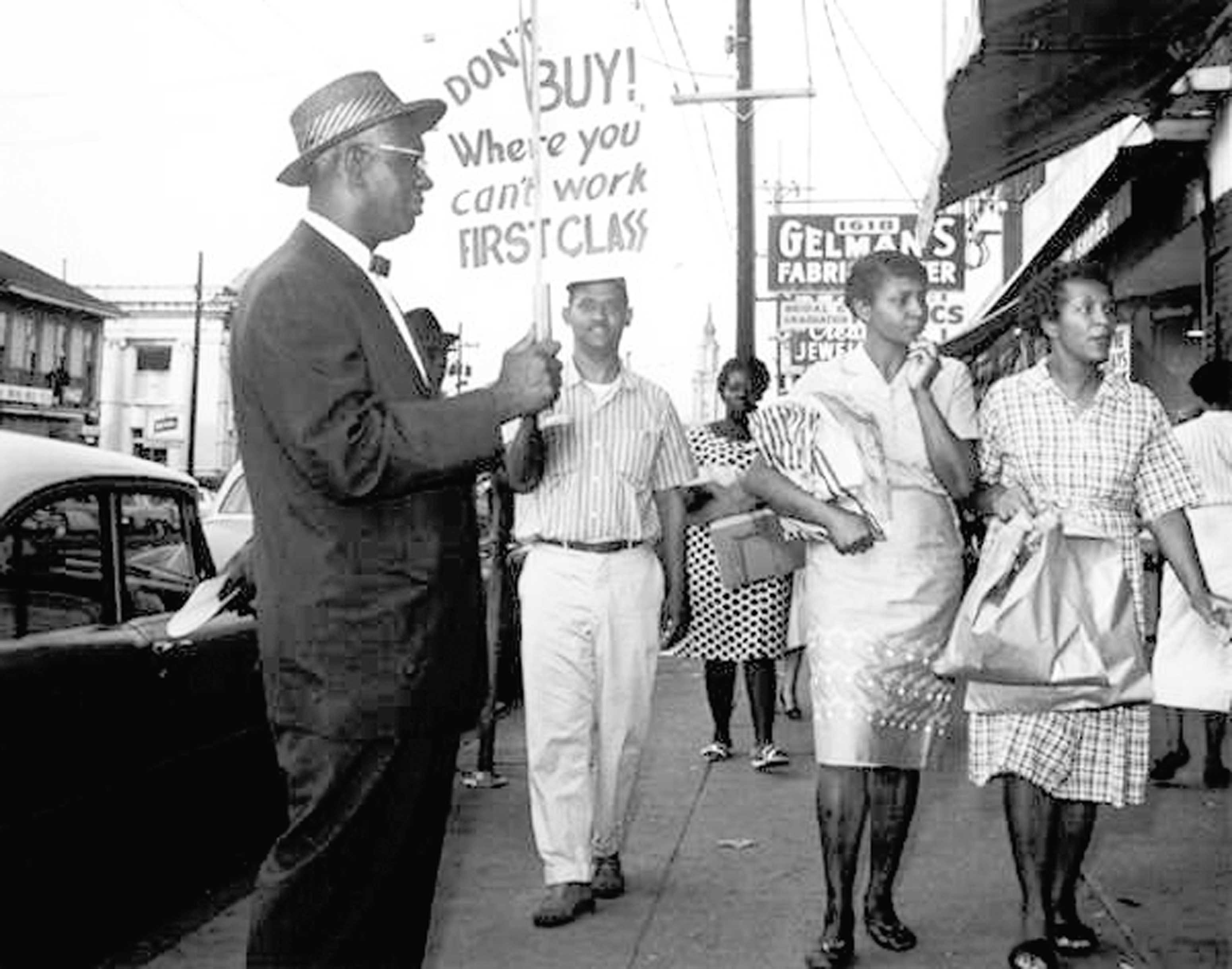
Few twentieth-century political movements have galvanized black communities into action like the "Don't Buy Where You Can't Work" campaigns. These campaigns sought to boycott stores in black communities that refused to hire black employees. The "Don't Buy" movement used mass protest and direct action tactics such as economic boycotts and picketing as potent political weapons.  

Brilliant! Wheelchair users can take a page from this playbook. I encourage all wheelchair users not to patronize businesses where they can't get a job because of accessibility.  

Oh wait!  They can't get in to shop, so a boycott is meaningless!  

Just another Catch-22 faced by wheelchair users in Halifax, and I've written about it before, as has Contrarian.  Halifax and Nova Scotia enable discrimination against people with disabilities through subtle exceptions to the building code.  Your old building doesn't need to be accessible, so you don't need to hire anyone with a wheelchair.

Last week, an inaccessible business (two steps at the entrance) on Spring Garden Road, exactly  493 meters from where I am writing this, advertised for a sales associate.  An attractive-sounding job, the advertisement ending with this: (emphasis in original):

“Please make sure to drop off your resume and cover letter in person, during business hours and ask to speak with our manager ****.  See you soon :) NO EMAILS PLEASE.”

Because this business is not wheelchair accessible there is a precondition that a wheelchair user cannot meet.  I'm not saying that this employer has to hire a person who uses a wheelchair, just that he shouldn't be able to prevent them from applying.

After I contacted the business owner with some suggestions, including getting a free ramp, the advertisement has disappeared from the website.  They didn't write back.

The Nova Scotia Human Rights Act says:
  • (2) No person shall use or circulate a form of application for employment or publish an advertisement in connection with employment or prospective employment or make an inquiry in connection with employment that, directly or indirectly, expresses a limitation, specification or preference or invites information as to a characteristic referred to in clauses (h) to (v).....[Item (o) is physical disability or mental disability]
That's pretty clear.  You can't require wheelchair users to present their job applications in person in an inaccessible location.

What do I propose to do about this?  Not much.  The offending business might get it's wrists slapped by the Human Rights Commission after a lengthy process, but that result would not apply to the literally hundreds of inaccessible businesses in Nova Scotia.  

I know this business is engaged in an unfair practice, and if you can follow the clues, you know who they are.  It's just not worth the effort to tackle a mountain of bias one case at a time.  As I suggested earlier, the best way to remedy this unfairness is through incentives and savings.  It's in our own interest to have accessible businesses, in order to encourage employment and increase retail traffic.  

Epilogue


Peter MacKay, Minister of Justice for Canada, endorsed the Mother Canada Monument with these moving words:

“This Memorial is a wonderful initiative that will give Canadians a steadfast symbol here in our country, to honour the unsurpassed bravery in the name of freedom and liberty, that Canadian soldiers displayed.   This monument makes that symbol of sacrifice more accessible to Canadians.”

The biggest battle I’ve ever faced in my entire life is here at home - Major Mark Campbell
Major Mark Campbell, who had his legs blown off in Afghanistan, would not be able to apply for the job on Spring Garden Road.  Fixing that would be a more fitting monument.

July 26, 2015

Getting on with Business

The best medicine for any disability is self-esteem, and the best thing for self-esteem is self-reliance.

A Complicated Problem
Should we focus on jobs creation or workforce optimization?
How to deal with a growing population of people with disabilities?
Is Social Assistance a trap for some people?
How do we pay for modern accessibility standards?

I'm not in tune with provincial arithmetic, nor do I have access to all the numbers. But it strikes me there is a sensible and thrifty solution that serves Nova Scotians and not Bay Street:

In a nutshell
For every 1000 people with disabilities moving from Social Assistance to Minimum Wage or better
Savings in Social Assistance$9,840,000
New tax revenue$1,452,000
Worker Incentives-$2,000,000
Accessibility Incentives-$5,000,000
Net annual savings$4,292,000

The Details


Disability keeps a lot of Nova Scotians from working. What's seldom recognized is the fact that many are prevented from working by arbitrary barriers and rules. Examples abound - every retail business with steps and no ramp represents a place no wheelchair user can work or shop. Some businesses that want to be more accessible run afoul of counterproductive regulations. Up until 2013, people with some disabilities couldn't even get in to MLA constituency offices, let alone work. We should find a way to remove barriers to employment without causing hardship to employers. We need to get creative.

Although the following math works for anyone on social assistance, it is especially appropriate for people with disabilities, who are eagerly awaiting new legislation, but fear it will be derailed by the perception of cost. It can pay for itself and then some.

The current focus

Igate and RBC are recent out-of-province beneficiaries of taxpayer largesse. In exchange for committing to bringing jobs to Nova Scotia, the income tax revenue from those jobs is more or less refunded to the company. Details below. The notion that RBC (2014 profit $9 billion) needs the people of Nova Scotia to cough up $22 million over 10 years reflects poorly on RBC's corporate citizenship.

There is some truth that the new employees have a multiplier effect due to spending, but that's a subject of much speculation. Any multiplier effect is considerably diminished by the fact that rebates will end up on Bay Street Toronto, not Bay Street Antigonish.

Last week I wrote about the RBC deal, which nets the taxpayers of Nova Scotia $1,020,000 over ten years. I pointed out that Laurel Broten, CEO of NSBI, will earn $2.1 million over those same 10 years, leaving taxpayers $1,080,000 in the hole.

An alternative: saving more by spending less

The present NSBI strategy is just to give in to corporate demands, and the error is compounded by the neglect of opportunities to save real money by spending less. This doesn't have to be Greek-style austerity, just common sense.  Moving people from social assistance to work is an excellent investment. At the same time, making Nova Scotia businesses accessible gives them a greater selection of customers and employees. We should support our own entrepreneurs, not ones in New Jersey.

The Department of Community services budgets $387 million for Employment Support and Income Assistance. How many people are helped and at what level seems to be an Official Secret, but a rough guess is that a typical recipient is eligible for these monthly amounts:

Personal (includes food)$255
Rent - up to$535
Clothing$30
Total$820

or $9840/year.

Using that amount, how does hiring just 10 Nova Scotians with disabilities who are currently receiving social assistance compare with the NSBI deals? 


Keeping incentives local

This isn't a jobs plan, it's a people plan. We should recognize that people with disabilities have been excluded from the workforce.  For everyone's sake, we need to make better use of our human capital. The important question is the net benefit to taxpayers. Moving one person from social assistance to work can save taxpayers $11,292 a year, while subsidizing a "new" RBC job is worth just $208. In the former case, this is because every job means a savings of $9,840 (plus some administrative savings) in social assistance instead of an expense in the form of a rebate.

I'm proposing that some of the savings realized by moving people from social assistance to work be used as an incentive to home-grown employers and reward to participants. A person going from $9840/year to full-time minimum-wage employment has more use for a reward than the Royal Bank. And by encouraging local employers to make accommodations for disabled workers, we can make a permanent dent in the chronic underemployment of people with disabilities, only 47.9% of whom are employed (68.7% for everyone else).

Incentives should be well-integrated with existing training efforts and follow the principle that the money is tied to individuals, not government.  And those incentives will be spent in-province, of course, instead of vanishing and reappearing on Bay Street balance sheets.

Making it happen

Just as accessible constituency offices are a symbol of democracy, removing barriers to productive work is a symbol of equality. Figuring the cost of social assistance for disabled Nova Scotians and devising useful work incentives ought to be a priority at least as important to government as enticing some company from New Jersey to bring a few jobs to Dartmouth. We can take pride in fairness. 

Getting people from social assistance to work is complicated. Few people would choose to live in the poverty imposed by the basic allowances of the Department of Community Services. On the other hand, inconvenience, inertia and low expectations mitigate against risking a change. The nightmare stories are legion.

Consider getting to work in the first place: not all bus routes in HRM are accessible, in rural areas transportation can be nonexistent, Access-a-Bus is inflexible to the point of being useless. Or job accommodation: Employers are fearful of expenses like accessible washrooms or special tools like accessible workstations. Or the daunting 103 page rulebook controlling every aspect of your life. Independence and change can be scary, particularly when your self-reliance is untested.

Currently, a social assistance recipient trying work as an experiment is allowed to keep the first $300 earned plus 30% of anything over. A minimum wage job is worth $1767/month. A half time experiment would be worth $883 gross, or $300 + (30% of $583 = $175). Working 80 hours/month would be worth $475 or $5.90/hour. Not much incentive, and I doubt many are tempted.

In the US, those receiving Social Security Disability Benefits may keep their entire benefit while working full-time for up to 9 months.

An even more attractive alternative would be to spend some of the $11,292 savings per job on incentives, as I suggested above. $500 to workers for transitional expenses, $1500 to the worker at the end of a year of full-time employment, $2000 or more to any Nova Scotia employer for workplace accommodations, $2000 to the employer for public accessibility. Still leaving $4292 for the taxpayer - more than 5 times better than the Igate deal. We should be generous to our own employers and to ourselves.

Worth Remembering
Hiring just 10 workers currently receiving social assistance, taxpayers receive more than the direct benefit of the RBC deal.  

There are 12,641 people in the demographic: Nova Scotians of working age, with mild or moderate physical disabilities, not currently employed. They will have a variety of income sources - Canada Pension Plan, Provincial income assistance, private insurance. It's difficult to say how many have income primarily from the province, but someone knows the answer.

It will be hard work, but sustainable, predictable and in keeping with our ideals. There should be no disincentives to work.

The payoff

The accessibility legislation promised by this government will be a source of apprehension for many Nova Scotia businesses. Consequently, there are tremendous benefits to linking accessibility with employment. It's an incentive for employers, taxpayers and job-seekers alike. It has immediate and tangible rewards. It has lasting implications for the general public. It's transparent, voluntary and incremental. It strengthens the case against counterproductive by-laws. It makes accessible transportation a necessity. It saves a ton of money. Most of all, we help ourselves.

It will be a sign of progress; that Nova Scotia can be self-reliant, won't heed the siren call of corporate welfare and is intent on making the most of its human capital. That's the kind of responsible message Bay Street respects.


September 18, 2014

Math

Yesterday, I had an ice cream in Halifax's Public Garden with my friend J.  He is in his final semester as an Undergraduate, then on to a Master's program and a PhD, before entering University teaching.

I would say that J.'s success is highly likely - he's smart, articulate, pleasant and confident.  I base that assessment on 25 years experience interviewing, representing and advising thousands of candidates for Harvard.

Last time I saw J. he had a rickety and ill-fitting old wheelchair.  This time, he had a spiffy new titanium one.  It fits better, his posture is better, his health is doubtless better.  Nice wheels!  He's a wheelchair rugby athlete, so he goes everywhere by pushing.  The Garden is almost exactly a mile uphill from his apartment.

My wheelchair is the same model, so out of curiosity asked J. what his cost.

$4600.00

Knowing his precarious student finances, (there are no family resources) I asked J. how he was able to afford it.  It's a long and discouraging answer.

"I applied to Easter Seals, but was rejected based on my income.  I work in the library, making student IDs for something slightly better than minimum wage, maximum 15 hours/week term time.   My student health insurance has a $300 limit on durable medical equipment.  In order to get help from the Department of Community Services, I'd need to be on public assistance.  If I was on public assistance, it would be tricky to attend university and my income would be limited to $300.  But I could get an allowance of $800 or so a month and a wheelchair.  So they would end up paying $9600/yr + $4600 or $14,200.  In any case, I'm unwilling to give up my education."

"In the end, two of my buddies starting crowdfunding for me and raised about half.  It turned out Easter Seals didn't spend their entire budget, so they came through with the other half."

Let me be clear on that.  Community Services will help J. get a wheelchair, but only if they also spend an additional $9600 for support.

If you use a wheelchair, you will understand how much it matters to have a comfortable, bespoke place to park your butt 16 hours a day.  It's like having only one suit - it better be Wool, not Wal-Mart. In pursuing any career, it's wise to look your best.  In order to look your best in a wheelchair, you can't be using a $299 model from Lawton's.


The simple act of getting around shouldn't require J. to surrender his ambition.

Here's an analogy:

One of the few drawbacks of single payer medicine is that there are no bills.  In the US, the bill for a new hip is typically about $30,000.  Probably a usable figure for us.  Say 6 of J.'s wheelchairs.

Is a hip the same as a wheelchair?
  • Wheelchairs are used by people for whom walking is difficult or impossible due to illness, injury, or disability.                                                                                             -Wikipedia
  • The goals of hip replacement surgery include increasing mobility, improving the function of the hip joint, and relieving pain.                                              -National Institutes of Health
It would require serious semantic acrobatics to concoct a difference.

So there we sat eating our ice cream, the hopeful young scholar and I.  While a dozen or so seniors, recovering from hip replacement surgery in the QEII were wheeled around the Garden by loving family members.  The expense of those hips represents 72 wheelchairs.

For aging Nova Scotians joint replacement is a ritual, an entitlement.  In my building, people are always showing off scars.  For an up and coming scholar, getting a decent wheelchair is just another in a long series of hurdles.  Hips vs. wheelchairs is an arbitrary and indefensible distinction, serving only to discriminate against largely disenfranchised Nova Scotians with disabilities.

Ray Ivany:  J. is the human capital you've told us to maximize.  Got any ideas?  I do.  
  • Send Community Services back to math class.
    • Reward work, don't punish it
    • Same for ambition
  • Make doctors explain why hips and wheelchairs are different
    • When they can't, devise a mobility program  that includes both
  • Make universities negotiate realistic health insurance for students
Gus Reed

April 13, 2014

Equal Opportunity for Nova Scotians – Interim Report

Here is the Introduction.  Read the complete report here

Introduction

The new Liberal government of Nova Scotia has promised to enact legislation to address the circumstances of people with living with disabilities. ProBono student volunteers at Dalhousie law school have been working with the James McGregor Stewart Society to outline legislation to be enacted in Nova Scotia. The purpose of the draft is to ensure the government is provided with context, information and background when addressing the situation of people who are prevented from the full enjoyment of society. In our research, we have come to realize that this is not just a human rights issue but a civil rights issue as well. In the best sense, this is about fulfilling the promise of the Charter of Rights and Freedoms for all Nova Scotians.

Our overarching goal was to determine a way to offset individual differences with accommodations, and to make that a requirement of the legislation. Abilities do vary, but they should not be defined by intentional or accidental barriers.

We examined the Access for Ontarians with Disabilities Act, in particular the 5 year review mandated in 2005, and the Americans with Disabilities Act.  They are summarized below.  We tried to account for the complexities of The UN Convention on the Rights of Persons with Disabilities and to reconcile our efforts with some of its obligations.

We kept a log of important concepts in the form of Principles.  Three fundamental requirements quickly emerged:
  •  Written standards for infrastructure and process
  •  Enforcement by government
  • Application to private and public entities

Our draft legislation, in narrative form, which we have called the Equal Opportunity for Nova Scotians Act, follows the summary of our research.  The Act is intended to create standards, and to hold the provincial government accountable for the commitment they made. The Act covers employment, transportation, accommodation, communications and the provision of goods and services.

Following the draft act is a summary of an on-line survey we administered.  We circulated it to about 150 people, generally activists and got about a 50% response.  The summary is based on the first 65 responses.  Generally, the priorities expressed in the survey are consistent with our vision of the legislation.  It is important to note that there is an undercurrent (not always well hidden) of frustration with government, especially among those who identify themselves as disabled. 

For ease of understanding, we use  the word “disabled” in a conventional sense.  We do so reluctantly, because it implies that a person has some condition that prevents participation.  Almost always, exclusion results from a barrier, intentional or accidental.  Perhaps the new legislation can help us understand that we are all different and stand to benefit equally from removing barriers.

Important as a piece of legislation may be, any law cannot succeed without the commitment of the government, organizations, businesses, and community members.  Attitudes towards any marginalized person in our province are transmitted through various bodies and individuals. When the leaders in our community project an attitude that highlights the importance of equality and encourages accommodations, that attitude will become pervasive in all aspects of our community.

If you wish to provide feedback on this draft, please email the James McGregor Stewart Society at wcreedh@gmail.com.

- Gus Reed, Kelsey Evaniew, Ben Corkum & Lisa Wagner

Kelsey Evaniew is in her third year of law school. When she is not in the library, she can usually be found in one of Halifax's many cafes, reading.  

Lisa Wagner graduated from the Schulich School of Law in 2012 and completed her articles in Vancouver. She transferred to Nova Scotia in 2014 and she currently practices personal injury law.

Gus Reed is the co-founder of the James McGregor Stewart Society

Ben Corkum is in his second year of law school with a passion for studying criminal law, mental health problems and the fine arts


Pro Bono Dalhousie is the organization through which most law students first connect to the broader Halifax community. Pro Bono Dal is the local chapter of Pro Bono Students Canada (PBSC), a nation-wide program that serves as an access to justice initiative providing legal services without charge to organizations that cannot afford independent legal advice. PBSC has chapters at all 22 law schools in Canada. Each year, PBSC provides 1400-1500 law students with volunteer opportunities to connect with their local community, and develop their legal skills, by working with lawyer supervisors and up to 400 organizations coast to coast.

March 24, 2014

The road to Hell

We've all heard the news that the 85 richest people have as much money as the entire poorest half of the world.  This is part of the conversation in the US, where President Obama wants to raise the minimum hourly wage to $10.10.  There are the usual arguments from greedy Republicans that raising the minimum wage will lead to layoffs.  The Gap knows better, and has already committed to meet a $10 threshold because it's good for business.

In Nova Scotia, the minimum wage for experienced employees is $10.30.  So we're righteous.  Right?


Meanwhile in Ontario, the Human Rights Tribunal just awarded 10 years of back pay to a woman who made $1.25 an hour.


This woman, Ms. Garrie, has an "intellectual disability" and worked in a bottling plant, packaging wine.  You should read the decision to appreciate the arguments.  And a very informative broadcast.


The owner of the business sent a letter to the tribunal saying Garrie was a “trainee” and not an employee. As a trainee, she was paid an honorarium amounting to about $50 a week so she could continue to receive Ontario Disability Support Program payments without triggering claw-backs.

There are a ton of exceptions to the minimum wage requirement in Nova Scotia:
  • Camp counselors
  • Salespersons on commission
  • Agricultural workers
  • Trainees
  • Apprentices
  • and the mysterious "employees for whom there are special orders by the Governor in Council"
By way of comparison, this comes at a time that we learn the CEO of Emera earned $4.7 million last year.   That's $2,350 an hour.  228 times the statutory minumum wage.   1,880 times what Ms. Garrie made.  Mr. Huskilson makes more in 60 hours than her award for 10 years of back pay!

I would guess that if a woman in Ontario made $1.50 an hour, it's happened here in Nova Scotia.  It certainly happened in Iowa, as the New York Times reported last week.  That was all about agricultural workers, another exempted class in Nova Scotia.  

In the US, the National Council on Disabilities eloquently urged President Obama to extend his minimum wage order, saying that a subminimum wage
is a policy relic from the 1930s, when discrimination was inevitable because service systems were based on a charity model, rather than empowerment and self-determination, and when societal low expectations for people with disabilities colored policymaking. NCD stands for the principle that no person with a disability should be discriminated against in an employment setting by being paid less than the minimum wage available to all other citizens.
The letter is worth reading.

And in Ontario, the Human Rights Tribunal "urges the province’s human rights commission to determine if the practice of paying less than minimum wage is widespread, and if so, to advise the province on how to stop it."

In Canada, Alberta, Manitoba and Saskatchewan explicitly allow lower wages for people with disabilities.  In Nova Scotia, there are dozens of charities using the 'trainee' rubric.  It would be reassuring to know about their pay scales and the `trainee` positions.  How long do they typically last? Do trainees move into regular jobs?   


The 2013 report Choice, Equality and Good Lives in Inclusive Communities submitted to the Department of Community Services says: "the Services for People with Disabilities program currently funds thirty Adult Service Centres (ASCs). These service providers deliver a system of vocational services largely through segregated, sheltered day programs and represent the predominant response to the employment needs of people with disabilities".  

Whatever the arrangement, those people are better off in the workplace you say.  Some have high needs and the employer can provide supervision and other services.  That may be, but it shouldn't be necessary to bend the rules to help people.  Pay the minimum wage, account for supervision and services.  Show us the math. 

Those people.  Not someone like me, right?

I wrote to Easter Seals Nova Scotia on March 9 to inquire about their wage practices.  They operate a variety of businesses on the sheltered workshop model.  I have received no response as of the 23rd.  Is there a problem with asking?

No doubt sheltered workshops are operated with good intention.  The pavement of the road to Hell.  But that doesn't make it right, or even legal.  How can it possibly benefit anyone to be treated as second class citizens?  Confusion about whether individuals with differences are objects of pity or real people is exactly why Nova Scotia needs credible and enforceable legislation.


Our notoriously ineffective Human Rights Commission could conduct an investigation, as they are empowered to do.  Or the Disabled Persons Commission could see if people were being served by this "training" loophole.  Trust me, that won't happen.


Barbara Hall, chief commissioner for the Ontario Human Rights Commission, welcomed their ruling.  “The fact that we intervened in the first place shows we are really concerned about this issue and the seriousness with which the tribunal took it is very important,” she said.

So we call on sheltered workshops to publish and explain their wage scales and record of job placement.  Perhaps, to protect their reputation, they will insist on a Human Rights Commission ruling.


Gus Reed


PS Here`s something from Ohio.  It would be interesting to know how Nova Scotia compares: